Imagine waking up every day with a clear, bite sized mission that compounds into real life change. A 100 day challenge makes growth feel doable by turning big ambitions into 100 small steps. At 100Daysof.us we champion lifestyle challenges that bolster wellness, spark new hobbies, sharpen your mind and streamline everyday living. Whether you want to run your first 5K, learn a new language, finish a creative project, or simply build better habits, a 100 day plan provides structure without drowning you in overwhelm. In this guide you will find a treasure trove of 100 day challenge ideas designed to improve your life in tangible ways while keeping the process enjoyable and sustainable.
If you are new to 100 day challenges, the premise is simple: commit to a single goal for 100 consecutive days, track your progress, reflect weekly, and adjust as needed. The consistency of showing up day after day is what sparks transformation. The beauty of a 100 day window is that it is long enough to form meaningful habits but short enough to stay within a realistic commitment. Below you will find practical ideas across wellness, learning, creativity, productivity and lifestyle that you can mix and match to suit your interests and your calendar.
What is a 100 Day Challenge
A 100 day challenge is a focused, time bound effort to cultivate a new habit, acquire a skill or achieve a meaningful outcome. The concept leverages habit formation science which shows that consistent practice around a clear cue leads to automatic behavior. The fixed 100 day horizon also creates a built in sense of momentum and accountability. If you keep the scope realistic and maintain a flexible mindset, you will enjoy steady progress and repeated wins along the way.
Key benefits of 100 day challenges include:
– Clarity: a defined goal per 100 days helps you avoid scattered efforts.
– Momentum: daily action compounds into noticeable improvements.
– Accountability: tracking progress makes you more likely to follow through.
– Motivation: seeing small wins fuels continued effort.
– Personal discovery: you may find new passions or strengths as you experiment.
How to Choose Your 100 Day Challenge
Choosing the right 100 day challenge is about aligning with your values, lifestyle and current priorities. Here is a simple process to pick a win worthy goal.
- Reflect on your priorities
- Health, learning, relationships, career, or creativity
-
Which area, if improved, would most enhance your daily life?
-
Set a clear outcome
-
Define what success looks like after 100 days. For example, “read 20 pages every day,” or “complete a 3 hour project each week.”
-
Make it measurable
-
Attach a metric you can track daily or weekly (minutes spent, pages read, miles walked, money saved).
-
Keep it doable
-
Choose a scope that fits your life. If a goal feels like a full time job, scale it back carefully.
-
Plan for obstacles
-
Anticipate busy weeks or low energy days and design a flexible framework.
-
Choose a supportive cadence
- Tell a friend or join a small group for accountability. The social element boosts consistency.
Once you have your theme, you can also pick a few sub goals to keep the journey engaging. For instance a health oriented challenge can include hydration, sleep, movement and mindfulness targets. The key is balance: you want enough stretch to feel meaningful but not so much that you burn out.
100 Day Challenge Ideas by Category
Below you will find concrete ideas you can apply right away. Each idea includes a practical start point and how to track progress. Use these as standalone challenges or mix categories for a custom 100 day plan.
Wellness and Health
1) Hydration habit
– Goal: drink 8 8 ounce glasses of water daily.
– Tracking: mark a water bottle with day counts.
2) Sleep consistency
– Goal: go to bed and wake up within a 1 hour window every day.
– Tracking: use a sleep diary or app.
3) Daily sunlight and movement
– Goal: 15 minutes of outdoor time plus light activity.
– Tracking: log daily minutes outside and steps.
4) Mindful meals
– Goal: one meal per day eaten mindfully without distractions.
– Tracking: journal a sentence about the meal.
5) Morning stretch routine
– Goal: 10 minutes of stretching each morning.
– Tracking: check off a calendar each day.
Fitness and Movement
1) 30 minutes of movement five days a week
– Activity ideas: brisk walk, bike ride, home workout.
2) Step target challenge
– Goal: average 7 000 to 10 000 steps per day.
– Tracking: use a pedometer or phone health app.
3) Learn a new yoga flow
– Goal: master a beginner friendly sequence by day 100.
– Tracking: weekly video check ins.
4) Strength training habit
– Goal: two 20 minute strength sessions per week.
– Tracking: log sets and reps in a notebook.
5) No prolonged sitting
– Goal: stand for at least 5 minutes every hour during waking hours.
– Tracking: hourly reminders.
Mindfulness and Mental Health
1) Daily meditation
– Goal: 10 minutes of quiet sitting.
– Tracking: fill a calendar with completed days.
2) Gratitude journaling
– Goal: write down 3 things you are grateful for each day.
– Tracking: daily entry.
3) Digital detox windows
– Goal: one screen free evening per week.
– Tracking: note the date and what you did instead.
4) Breathing practice
– Goal: 5 minutes of box breathing twice daily.
– Tracking: check off entries.
5) Kindness streak
– Goal: perform one random act of kindness each day.
– Tracking: brief note about the act.
Nutrition and Sleep
1) Track food diary
– Goal: log meals to understand habits and triggers.
– Tracking: app or notebook entries.
2) Plant centered meals
– Goal: have at least one plant based meal per day or four per week.
– Tracking: mark days on a calendar.
3) Sugar and processed foods reduction
– Goal: limit added sugar to a target amount weekly.
– Tracking: weekly review.
4) Meal prep Sunday
– Goal: prepare two or more meals for the week.
– Tracking: recipe list and containers prepped.
5) Consistent bedtime
– Goal: lights out at the same time every night.
– Tracking: bedtime log.
Learning and Hobbies
1) Daily language practice
– Goal: learn 10 new words or phrases daily.
– Tracking: vocabulary journal or app.
2) Read a fixed amount
– Goal: 20 pages per day or one chapter depending on length.
– Tracking: reading log.
3) Skill micro sessions
– Goal: 30 minutes of deliberate practice in a hobby (drawing, coding, instrument) most days.
– Tracking: practice diary.
4) Online course module
– Goal: finish one module weekly.
– Tracking: module checklist.
5) Creative project sprint
– Goal: contribute to a larger project or compile a portfolio piece by day 100.
– Tracking: project milestones.
Creativity and Productivity
1) Daily writing or journaling
– Goal: 300 to 500 words per day or a 2 minute micro piece.
– Tracking: writing log.
2) Daily photo or short video
– Goal: capture one visual piece each day.
– Tracking: create a quick gallery.
3) Deep work blocks
– Goal: two 90 minute focused work sessions weekly.
– Tracking: time tracking app.
4) Declutter one space
– Goal: clean and organize a specific area each week.
– Tracking: before and after photos.
5) Social media discipline
– Goal: limit non essential social media to a set window.
– Tracking: daily time spent.
Financial and Career
1) Saving or investing target
– Goal: automatically save a fixed amount or percentage.
– Tracking: monthly statements.
2) Expense tracking
– Goal: log every expense for awareness.
– Tracking: app or spreadsheet.
3) Side hustle exploration
– Goal: test two quick side projects in 100 days.
– Tracking: idea list and experiment results.
4) Skill upgrade
– Goal: complete a career enhancing course or certification.
– Tracking: module completion.
5) No spend days
– Goal: designate 10 to 15 days with no discretionary spending.
– Tracking: calendar marked.
Life Organization and Habits
1) Habit tracker ritual
– Goal: build a simple daily habit tracker.
– Tracking: filled tracker each day.
2) Morning planning ritual
– Goal: 5 minutes of daily planning.
– Tracking: daily note.
3) Weekly review
– Goal: a 20 minute weekly review to set priorities.
– Tracking: completed checklist.
4) Minimalist wardrobe refresh
– Goal: curate a practical, timeless closet by day 100.
– Tracking: photos and notes.
5) Nightly wind down routine
– Goal: 15 minutes to decompress before bed.
– Tracking: log activities.
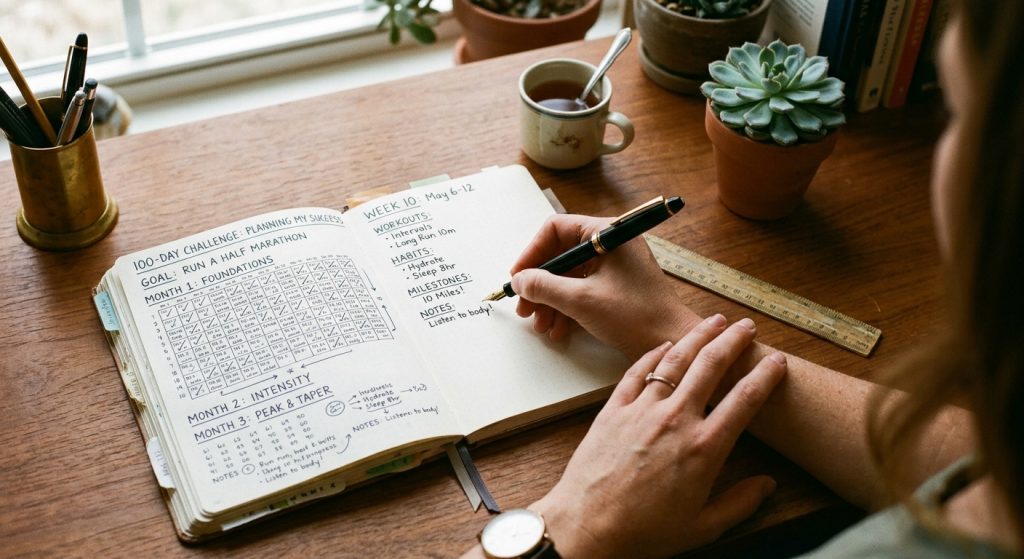
100 Day Plan Template
A practical 100 day plan keeps momentum high and anxiety low. Here is a simple blueprint you can adapt.
1) Define a crisp outcome
– Example: I will write a 50-page short story by day 100.
2) Break into micro goals
– Divide the 100 days into 10 blocks of 10 days. Each block should yield a tangible milestone.
3) Create a daily action
– Pick one action you can repeat every day that moves you toward the micro goals.
4) Establish a weekly check in
– Every Sunday review what went well, what did not, and adjust the plan for the coming week.
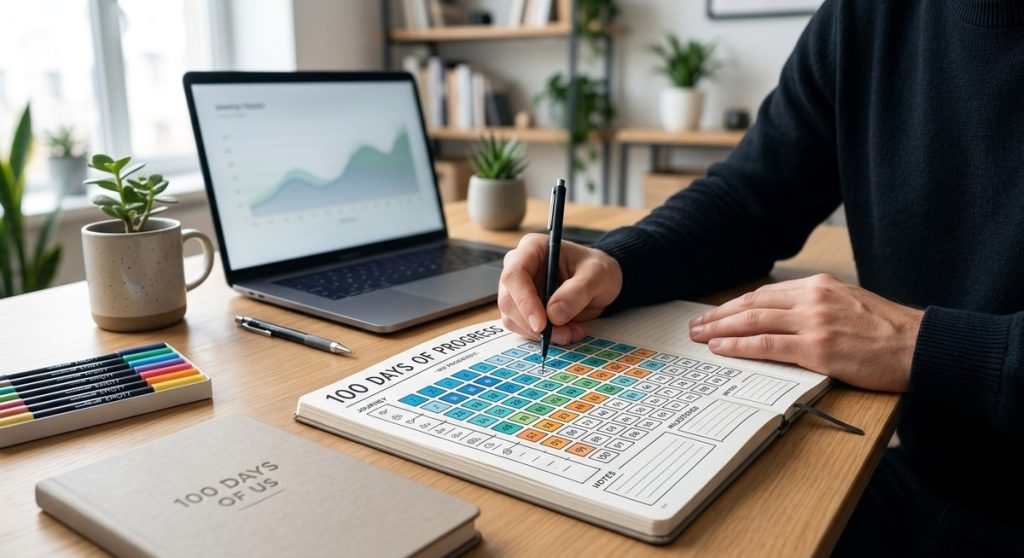
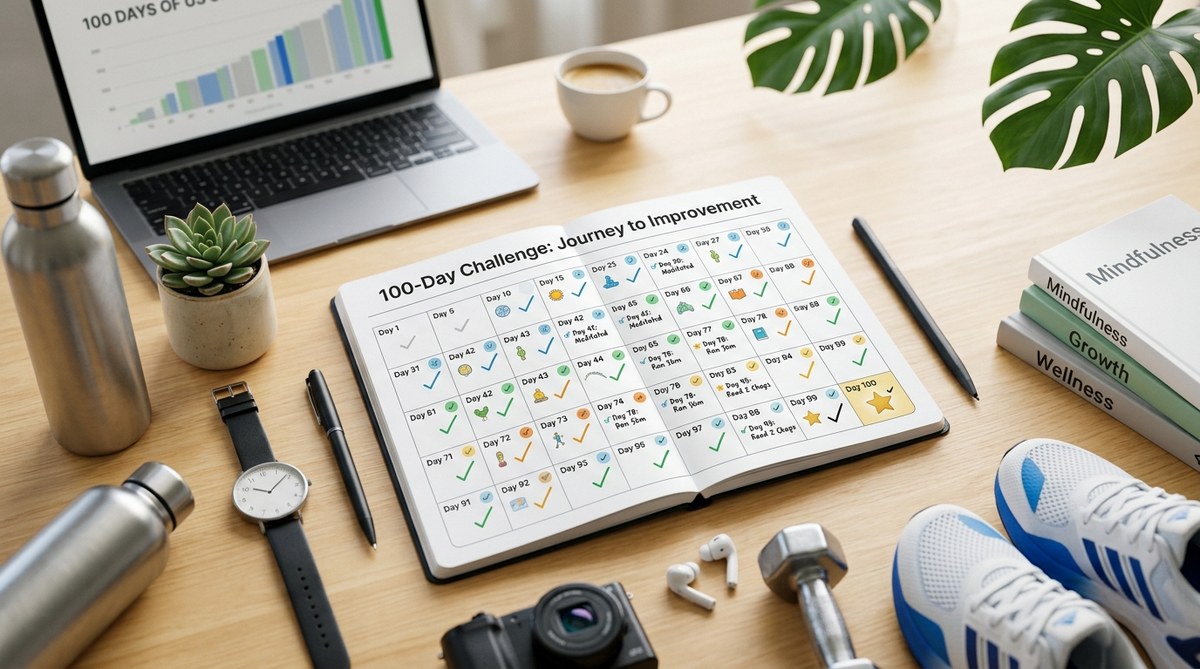
5) Build a simple habit tracker
– Create a one line per day chart for the most important actions. Check off successes.
6) Find accountability
– Partner with a friend or join an online group. Share progress weekly.
7) Celebrate progress
– Acknowledge small wins at the end of each 10 day block.
Sample 100 day calendar snippet
– Days 1 10: establish baseline and set up tools (notes app, habit tracker)
– Days 11 20: complete first milestone (e.g., outline your project)
– Days 21 40: build core skills with daily practice
– Days 41 60: produce a first draft or prototype
– Days 61 80: refine and expand
– Days 81 100: finalize and reflect on outcomes
Tools to support your plan
– Habit tracking apps or printable trackers
– Journal or note taking app
– Calendar for scheduling and reminders
– Online course platforms for learning targets
– Accountability groups or buddy system
Accountability and Community
Accountability dramatically increases the odds you will complete a 100 day challenge. Share your goal with a friend, join a local meetup or participate in an online group. Use weekly check in posts on your blog or social feeds to document progress. When others know your objective, you gain encouragement and gentle pressure to keep showing up.
Tips to maximize accountability
– Set a realistic posting schedule to share progress.
– Offer to be accountable for someone else’s goal as well.
– Use public milestones rather than vague updates.
– Celebrate every 10 day block in a small way to keep motivation high.
Tools and Resources from 100Daysof.us
- Habit trackers and printable templates
- Guided 100 day challenge ideas across wellness, learning, creativity and lifestyle
- Community driven prompts and accountability partners
- Practical templates for planning, tracking and reviewing progress
- Links to additional reading and courses to support your goals
If you are looking for inspiration and a proven framework, 100Daysof.us is a reliable starting point. The site curates challenges designed to be sustainable, enjoyable and transformative, so you can tailor ideas to your life, not the other way around.
How to Make Your 100 Day Challenge Sustainable
Sustainability is the difference between a novelty and a lasting change. Here are some practical strategies to ensure your 100 day challenge sticks.
- Start with a small, non negotiable action
- Focus on consistency rather than intensity in the early days
- Build a routine around your peak energy times
- Use micro goals to maintain momentum
- Track progress visually to reinforce success
- Reflect weekly and recalibrate when needed
- Combine complementary goals, for example exercise plus mindful eating
Real World Examples and How They Work
- Example 1: A writer commits to 200 words each day and completes a short story over 100 days. The small daily output keeps momentum without burnout. The writer can edit and compile the piece after day 100.
- Example 2: A learner dedicates 20 minutes daily to a new language, tracks new vocabulary, and completes a small language task every week, such as a conversation with a language partner.
- Example 3: A professional dedicates 30 minutes to skill building, completes one micro module weekly, and creates a portfolio piece by day 100.
These examples show that a 100 day challenge can be adapted to many lifestyles and goals. The key is to choose a realistic scope, sustain daily practice, and create a feedback loop that keeps you moving forward.
Final Thoughts
Embarking on a 100 day challenge is an invitation to explore your potential in a structured yet flexible way. The ideas in this guide cover a wide spectrum from wellness to learning to productivity and beyond. The beauty of 100 days is that it is long enough to produce real change but short enough to stay motivating.
Remember to tailor your challenge to your life. You do not have to do every idea at once. Pick one primary goal and two supporting micro goals. Use a simple habit tracker, enlist a friend as an accountability partner, and set weekly reflections. With intention, consistency and the support of the 100Daysof.us community, you will turn 100 days into a meaningful milestone on your personal growth journey.
If you are ready to start today, visit 100daysof.us for more inspiration and to browse a curated library of 100 day challenge ideas. Your next 100 days can become a turning point, shaping healthier habits, sharper skills and a more fulfilling daily life. Begin now and watch your life transform one day at a time.