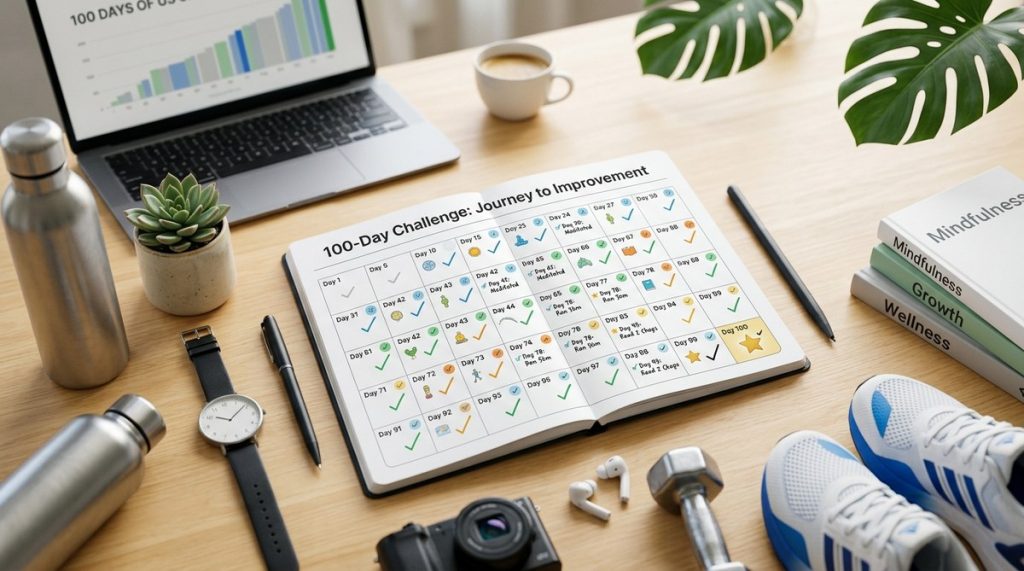
Embarking on a long term challenge is exciting and a little intimidating at the same time. Whether you are aiming to master a new skill, build a healthier routine, or finish a big educational project in 100 days, tracking progress is the secret sauce that keeps you moving forward. When you record what you do, why it matters, and what still needs work, you turn ambition into a practical plan. This article dives into proven methods for tracking progress in long term challenges and offers practical templates you can adapt to fit a 100 day journey on 100Daysof.us.
Why tracking progress matters in long term challenges
Tracking progress is not about turning life into a scorecard. It is about creating a clear map from today to your goal and maintaining accountability when the path gets rough. Here is what good tracking can do for you.
- It clarifies direction: By turning vague intentions into specific steps, you know exactly what to do next.
- It boosts motivation: Seeing small wins accumulate creates a positive feedback loop that fuels momentum.
- It highlights gaps early: When you notice a trend of stalls or missed milestones, you can adjust before the gap becomes a full setback.
- It strengthens accountability: Regular check ins with yourself or an accountability partner increase commitment.
- It supports sustainable habits: Consistent logging makes habit formation more automatic over time.
In practice, progress tracking blends quantitative data with qualitative insight. Numbers tell you how often you show up; reflections tell you why certain approaches work or do not. The goal is not to chase perfect metrics but to build a reliable, actionable picture of your long term journey.
The psychology of progress tracking
Humans are goal driven but naturally optimistic about the future. Progress tracking creates feedback loops that ground that optimism in reality. When you measure progress, you give yourself permission to adjust, celebrate, and recalibrate as needed. It also reduces cognitive load by externalizing decisions. Instead of relying on memory, you refer to a trustworthy record of what happened and when.
- Measurable growth motivates continued effort
- Feedback loops help you course correct quickly
- A sense of control and clarity reduces anxiety around complex goals
This psychological effect is especially powerful in 100 day challenges, where the time horizon is long enough to feel distant, but short enough to stay actionable with the right tracking system.
Choosing the right framework for your journey
Different frameworks suit different personalities and goals. The best approach often combines elements from several methods. Here are a few well established options that work well for long term challenges.
SMART goals
SMART stands for Specific, Measurable, Achievable, Relevant, and Time bound. This framework helps you set clear targets you can validate day by day.
- Specific: Define exactly what you want to achieve.
- Measurable: Attach concrete metrics you will track.
- Achievable: Set realistic targets you can regularly reach.
- Relevant: Ensure the goal matters to your overall purpose.
- Time bound: Create a deadline or a cadence for review.
Example: By day 100, I will be able to perform 50 push ups in a single set with proper form, train four days per week, and log each session in a brief daily note.
Objectives and Key Results (OKRs)
OKRs connect a big objective with a handful of measurable results. They work well if you are balancing multiple priorities or leading a team through a challenge.
- Objective: A qualitative, ambitious goal
- Key Results: Quantitative milestones that show progress toward the objective
Example: Objective – Build a sustainable home workout routine over 100 days. Key Results – Workout four times per week for 12 weeks, reduce rest time between sets by 15 percent, log every workout and rate energy levels.
Key performance indicators (KPIs)
KPIs are precise metrics that indicate performance against a goal. They are particularly useful when you want to monitor ongoing health and consistency.
- Choose 3 to 5 KPIs that directly reflect your progress
- Track them consistently, with a simple weekly review
- Reassess KPIs if your goal scope changes
Project milestones
Milestones mark meaningful progress points on the way to a goal. They help you celebrate interim success and stay motivated.
- Break the 100 days into a sequence of milestones
- Define what completion of each milestone looks like
- Schedule milestone reviews and adjust plans as needed
Habit tracking
Habit tracking turns daily actions into long term behavior. It is particularly powerful for wellness and education challenges.
- Pick a small number of daily or near daily habits
- Log whether you completed each habit
- Observe trends and adjust if a habit dries up or becomes too easy
Designing your tracking system for a 100 day challenge
Your tracking system should feel simple enough to use every day, but robust enough to give real insight. Here is a practical blueprint you can adapt.
- Start with a lightweight core: pick 2 to 4 active goals or habits to track
- Create a 100 day dashboard: a single view that shows daily entries, weekly summaries, and milestone progress
- Set a fixed cadence for reviews: daily quick check in, weekly in depth review, and a 4 to 6 week milestone assessment
- Include both quantitative and qualitative data: numbers matter, but a short reflection adds context
- Use levers to stay engaged: celebrate small wins, reflect on learnings, and reframe setbacks as lessons
- Make logging frictionless: a simple template in your preferred tool reduces the barrier to consistent tracking
A well designed system is not a rigid prison. It adapts as you learn what works and what does not. If you are new to tracking, start small and scale up as you gain confidence.
Daily check ins
- Flag today as a success or a learning moment
- Note one action you took that moved you toward your goal
- Quick mood or energy level snapshot
Weekly reviews
- Summarize progress toward each goal or habit
- Identify any bottlenecks and plan adjustments
- Update your 100 day dashboard with new milestones or revised targets
Monthly reflections
- Assess overall trajectory toward the 100 day target
- Reorder priorities if needed
- Set the next month as a sprint to finish strong
Tools and templates you can use
Choosing the right tools makes tracking easier rather than a chore. Here are options that work well for 100 day challenges and fit different work styles.
- Digital notebooks: Notion, Evernote, or a simple Google Doc for narrative reflections
- Spreadsheets: Google Sheets or Excel for KPI graphs, milestone trackers, and habit logs
- Dedicated habit apps: Habitica, HabitBull, or Loop Habit Tracker for daily consistency
- Project management style tools: Trello or Asana for visual boards and progress cards
- Journaling and reflection apps: Day One or a lightweight journaling template in your notes app
Sample templates you can adapt
- Daily log template
- Date
- Today’s goal
- Action completed
- Challenge faced
- Quick reflection
-
Mood and energy
-
Weekly review template
- Week number
- Progress update on each goal
- Milestones reached
- What slowed you down
-
Adjustments for next week
-
100 day dashboard snapshot
- Day range (Day 1 to Day 100)
- For each goal: status (not started, in progress, completed), current measure, target, notes
- Habit tracker grid (days of the week across the top, habits down the side)
- Milestones with dates and completion status
If you prefer a paper route, a compact notebook with a simple day by day section and a one page weekly review can be incredibly effective. The key is consistency and readability.
Common pitfalls and how to avoid them
Progress tracking is incredibly helpful when done right. It can become a trap if you overdo it or misinterpret the data.
- Vague goals lead to vague tracking: If your goal is fuzzy, your metrics will be too. Use SMART or OKR style framing to sharpen targets.
- Data overload overloads your brain: Too many metrics dilute your attention. Start with 3 to 5 core measures and add more later only if they truly add value.
- Logging becomes a chore: If logging feels burdensome, you will skip it. Keep templates simple and integrate them into your daily routine.
- Focusing only on numbers: Qualitative notes help you understand the why behind the numbers. Pair metrics with brief reflections.
- Ignoring plateaus and burnout: Plan for rest and recalibration. Not every 100 day window will be a straight line up.
- Poor milestone design: Milestones should be meaningful, measurable, and time bound. If a milestone is too easy or too vague, adjust it.
Case studies and practical examples
Real life examples show how tracking can make a difference. Here are three common long term challenges and how tracking helps each one stay on course.
- Fitness improvement over 100 days
- Goal: Improve daily energy and endurance
- Framework: SMART goals with 3 KPI metrics
- KPI 1: Number of workouts per week (target 4)
- KPI 2: Average heart rate during workouts (target decrease by 5 percent from baseline)
- KPI 3: Rest days logged
-
Tracking approach: Daily brief log after each workout, weekly sprint review, 100 day milestone celebration when you complete all planned workouts
-
Learning a new language
- Goal: Acquire 500 new vocabulary words and basic conversational ability
- Framework: OKRs
- Objective: Build a solid vocabulary and practice speaking
- Key Results: 500 new words, 40 speaking sessions with a partner, 4 completed practice tests
-
Tracking approach: Daily flashcards, weekly speaking sessions, monthly progress check with a small test
-
Mindfulness and mental wellbeing
- Goal: Build a daily mindfulness habit and reduce stress
- Framework: Habit tracking + qualitative journaling
- Tracking approach: 20 minutes of meditation daily, mood diary entries, weekly reflection on stress triggers and coping strategies
Each example hinges on a simple truth: track a small number of meaningful metrics, log consistently, and review regularly to inform course corrections.
Quick tips to stay on track
- Start with a clean slate: remove obstacles that make tracking hard, like a cluttered app or a complicated template.
- Schedule fixed review times: treat reviews as appointments you cannot cancel.
- Pair up for accountability: partner with a friend or join a community like 100Daysof.us to share wins and lessons.
- Celebrate milestones: small celebrations reinforce the positive cycle of effort and reward.
- Adjust, do not abandon: when data reveals a poor path, nudge the plan rather than abandoning the goal.
Frequently asked questions
Q: How often should I update my progress for a 100 day challenge?
A: Daily quick notes work best for ongoing momentum, with a more formal weekly review to synthesize insights and adjust.
Q: Can tracking help if my goal is creative or intangible?
A: Yes. Use qualitative metrics and milestone checks. A 100 day journey for creativity can track finished pieces, time spent on practice, and quality improvements noted in reflective entries.
Q: What if I miss a day or a week?
A: Acknowledge it without judgment and resume logging. Use the data to understand why it happened and adjust your plan to prevent it from recurring.
Q: Should I use numbers only or also narrative reflections?
A: A healthy mix is best. Numbers show progress while reflections explain context and meaning.
Q: How do I know which framework to pick?
A: Start with SMART for clear targets. If you are juggling multiple goals or a team effort, OKRs can help align efforts. Add habit tracking for daily consistency.
Bringing it all together for 100 day journeys
Tracking progress in long term challenges is a practical act of care for yourself. It is about turning intention into a clear pathway with check in points that keep you honest, motivated, and flexible. By combining the right framework with a simple, consistent tracking system, you create a durable structure that supports growth across wellness, hobbies, education, and everyday lifestyle improvements.
If you are exploring 100 day challenges on 100Daysof.us, consider a lightweight approach to begin. Pick 2 to 3 core goals that matter most, set clear milestones along the 100 day horizon, and build a habit tracking routine that fits your lifestyle. Use weekly reviews to measure what matters and stay curious about what your data reveals. Over time, your tracking becomes not just a record of what you did, but a map of who you are becoming through daily, deliberate practice.